If you’re attending ICRA 2026, don’t miss this full-day workshop exploring one of the most timely questions in robotics today:
What is the role of geometric methods in an era increasingly dominated by data-driven approaches?
Geometry has long been a cornerstone of robotics, shaping how we model, plan, and control robotic systems. At the same time, learning-based methods are rapidly transforming the field. This workshop brings these perspectives together, sometimes in harmony, sometimes in tension, to critically examine where geometry stands, where it struggles, and how it may evolve.
Can't make it to ICRA in person? Join us live on Zoom and take part in the panels, polls, and Q&A from anywhere.
Goal of the Workshop
Our goal is to build bridges between model-based, learning-based, and hybrid robotics communities, encouraging thoughtful dialogue rather than one-sided narratives, and to spark collaborations that shape the next generation of robotic systems.
Core Workshop Theme
In recent years, data-driven techniques have begun to dominate robotics research across perception,
control, and decision-making pipelines. Along the way, many paradigms for guaranteeing safety,
interpretability, and provable performance appear to have lost their former prominence, despite
once seeming indispensable. Indeed, the toolkit of differential geometry—including Lie groups,
topology, screw theory and dual quaternions—lies at the foundation of core robotics problems
across kinematics, dynamics, and machine perception, and yet many promising advances seem to
have abandoned such mathematical structure in favor of the world of computation and learning.
Therefore, in this workshop, we aim to question the evolving role of geometric methods within
today’s landscape—across research, education, and scientific communication—via panel debates
with domain experts. The goal is to invite controversial discussions to confront the tensions and
synergies between classical geometry and modern learning-centric paradigms.
The discussions will be framed around three cohesive questions:
-
Education
Claim: The mathematical foundations of geometry are a top priority for robotics education today.
What is the right balance in the curricula between geometric rigor and machine learning? Should differential geometry be a priority, even when many students may already be overwhelmed as they grapple with probabilistic and deep-learning concepts?
-
Research
Claim: The vast majority of interesting research questions on the role of geometry in robotics have already been answered.
What role can geometry play within the current research landscape, and what is the most effective means of developing representations: through learning or mathematical structure? Is the success of data-driven approaches due to methodological superiority or merely a temporary convenience due to data abundance in certain domains?
-
Communication
Claim: Writing papers and giving talks using formal mathematical jargon only serves to increase the field’s barrier to entry.
What narrative frameworks best convey the relevance and impact of geometry? How should authors balance the expressivity of abstract mathematical terminology with the associated high barrier to entry? Conversely, what is lost by writing in language that is suitable for a broader audience? In an era where “AI” dominates headlines, we will discuss how to articulate the complementary role of geometry to stakeholders ranging from funding agencies to industry partners and the public.
Confirmed Panelists

Noémie Jaquier
KTH Royal Institute of Technology
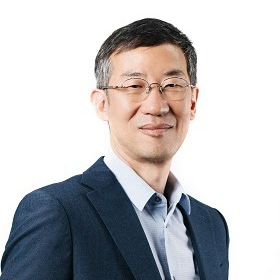
Frank Park
Seoul National University

Andreas Müller
Johannes Kepler University
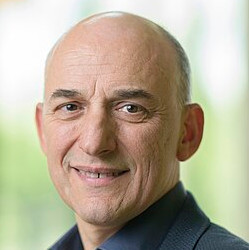
Stefano Stramigioli
University of Twente

Patrick Wensing
University of Notre Dame

Ross Hatton
Oregon State University
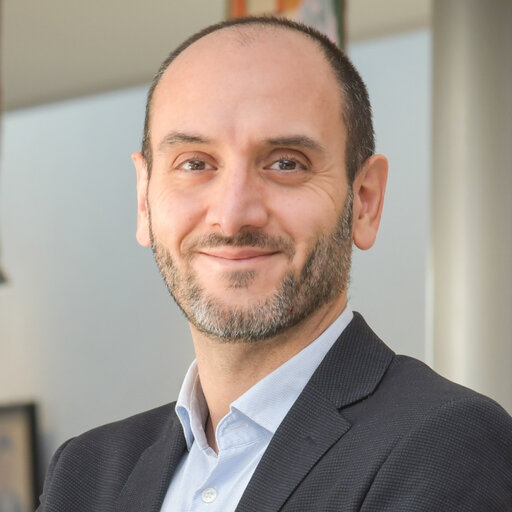
Antonio Franchi
Sapienza University of Rome and University of Twente

Georgia Chalvatzaki
Technical University of Darmstadt

David Rosen
Northeastern University

Bruno Vilhena Adorno
University of Manchester

Seth Hutchinson
Northeastern University

Nadia Figueroa
University of Pennsylvania
Accepted Contributions
▶
-
Internalizing Geometric Stability for Learning Quadrupedal Recovery on Irregular Terrains
Boyuan Deng, Xu Yang, Yilin Mo, and Nikolaos Tsagarakis
📄 PDF
-
Efficient Collision-Avoidance for Multi-Robot System with Superquadric Models and Sum-of-Squares Approximation
Siyi Lu, Sipu Ruan
📄 PDF
-
HumanoidPF: Collision-Free Humanoid Traversal via Geometric Guidance
Han Xue, Sikai Liang, Zhikai Zhang, Zicheng Zeng, Yun Liu, Yunrui Lian, Jilong Wang, Qingtao Liu, Xuesong Shi, Li Yi
📄 PDF
-
The Port-Hamiltonian Structure of Vehicle-Manipulator Systems
Ramy Rashad
📄 PDF
-
Ergodic Imitation for Adaptive Exploration around Demonstrations
Ziyi Xu, Cem Bilaloglu, Yiming Li, and Sylvain Calinon
📄 PDF
-
Lagrangian Neural Fields for Infinite-Dimensional Dynamics Modeling
Riccardo Morandi and Noémie Jaquier
📄 PDF
-
SQ-CBF: Signed Distance Functions for Numerically Stable Superquadric-Based Safety Filtering
Haocheng Zhao, Lukas Brunke, Oliver Lagerquist, Siqi Zhou, Angela Schoellig
📄 PDF
-
Introducing Sylvester Forms to Robotics: Efficient Closed-Form Pose Estimation
Jana Vráblíková, Ezio Malis, Laurent Busé
📄 PDF
-
Quantifying Action Uncertainty with Inaccurate Stochastic Dynamics through Conformalized Lie groups
Luis Marques, Maani Ghaffari, and Dmitry Berenson
📄 PDF
-
Digging into Learned Camera Self-Calibration: What Matters in Challenging Motion Sequences
Takayuki Kanai, Igor Vasiljevic, Vitor Guizilini, Kota Shinjo, and Yuto Mori
📄 PDF
-
Geometry-Aware Probabilistic Shared Autonomy with Riemannian Motion Policies
Kay Pompetzki, Cristiana de Farias, Joao Carvalho, Georgia Chalvatzaki, Jan Peters
📄 PDF
-
GAP: Geometric Anchor Pre-training for Data-Efficient Visuomotor Learning of Manipulation Tasks
Davide Buoso, Andrea Protopapa, Stefano Di Carlo, Francesca Pistilli, Giuseppe Averta
📄 PDF
-
Morphologically Equivariant Flow Matching for Bimanual Mobile Manipulation
Max Siebenborn, Daniel Ordonez Apraez, Sophie Lueth, Giulio Turrisi, Massimiliano Pontil, Claudio Semini, Georgia Chalvatzaki
📄 PDF
-
Learning to Cover: Imitation Learning from a Geometric Expert for MANET Deployment
Edwin Meriaux, Shuo Wen, Antonio Loría, Gregory Dudek
📄 PDF
-
Explicit Geometry for CPU-Efficient Mapping: Bridging Discrete Grids and Continuous Fields
José E. Maese
📄 PDF
-
Geometric and Model Priors in Motion Primitives
Maximilian Mühlbauer, Arne Sachtler, Alin Albu-Schäffer, João Silvério
📄 PDF
-
From Cylinders to Complex Shapes: Nematic Multi-Stable Shape-Morphing Cylindrical Actuators
Yaron Veksler, Sagi Senderovich, Jacob N. Miske, Jeffery I. Lipton, Amir D. Gat
📄 PDF
-
Lie Group Error Coordinates for Symmetry-Aware Reinforcement Learning applied to Quadrotor Low-Level Control
Andrea Pagnini, Ezio Malis
📄 PDF
-
Kinematics-Informed Data-Enabled Predictive Control for Mobile Robots
Binlin Zhang, Erkan Kayacan
📄 PDF
-
Graph-Based Reward Learning and Automatic Subtask Discovery for Long-Horizon Manipulation
Andrea Protopapa, Davide Buoso, Francesca Pistilli and Giuseppe Averta
📄 PDF
-
Cross-space Symmetry Composition in Robotics
Loizos Hadjiloizou, Rodrigo Pérez-Dattari, Noémie Jaquier
📄 PDF
-
Planning along Differentiable Charts of Constraint Manifolds with the Inverse Function Theorem
Thomas Cohn, Seiji Shaw, Nicholas Roy, Russ Tedrake
📄 PDF
-
Geometry as Inductive Bias in Data-Driven Robotics: Case Studies from the RobotGenSkill Project
Arno Verduyn, Ali Mousavi Mohammadi, Riccardo Burlizzi, Wilm Decré, Erwin Aertbeliën, Maxim Vochten, and Joris De Schutter
📄 PDF
-
Object Pose and Shape Estimation for Grasping: Does it Work?
Pavan Karke, Kushal Shah, Gaurav Singh, Md Faizal Karim, K Madhava Krishna, Rajat Talak
📄 PDF
-
Towards Modularity in Floating-Base Deep Lagrangian Networks
Lucas Schulze, Juliano Decico Negri, Victor Barasuol, Vivian Suzano Medeiros, Marcelo Becker, Jan Peters, Oleg Arenz
📄 PDF
-
Equivariant In-Context Learning for Grasp Adaptation
Rosa Wolf, Roman Freiberg, Loris Schneider, Rania Rayyes, Gerhard Neumann
📄 PDF
-
Reactive Motion Generation via Phase-varying Neural Potential Functions
Ahmet Tekden, Dimitrios Kanoulas, Aude Billard, Yasemin Bekiroglu
📄 PDF
-
Learning Transferable Motor Skills for Geometry-Aware Robotic Surface Tasks
Miroslav David, Karla Stepanova, Robert Babuska
📄 PDF
-
Integrating Topological Object Recognition into Semantic SLAM for Unseen Cluttered Environments
Avania Bhattacharya, Ekta U. Samani, and Ashis G. Banerjee
📄 PDF
-
Topological Priors for Learning Stable Dynamical Systems from Demonstrations
Lucas Schwarz and Florian Röhrbein
📄 PDF
-
The Topological Cage: A Search-Less Geometric Handshake for Medial Axis Injection
Shubham Puri Goswami and Ravi Prakash
📄 PDF
Tentative Schedule
All times are in Central European Time (CET). Schedule is subject to change.
🚨 Please note that each debate participant has been assigned to argue
for or against the claim under consideration, in the spirit of an academic debate.
This position may or may not reflect their true personal viewpoint,
which they will share after the formal debate! 🚨
Morning Session
09:00 - 09:10
Opening Remarks
Welcome and workshop introduction by organizers
09:10 - 10:00
Debate: Question 1 - Education
Claim: The mathematical foundations of geometry are a top priority for robotics education today.
Debate
10:00 - 10:20
Discussion: Question 1 - Education
Interactive session on educational challenges and opportunities
Audience Participation
10:20 - 10:30
Spotlight Talks
Quantifying Action Uncertainty with Inaccurate Stochastic Dynamics through Conformalized Lie groups
Luis Marques, Maani Ghaffari, and Dmitry Berenson
📄 PDF
Graph-Based Reward Learning and Automatic Subtask Discovery for Long-Horizon Manipulation
Andrea Protopapa, Davide Buoso, Francesca Pistilli and Giuseppe Averta
📄 PDF
Cross-space Symmetry Composition in Robotics
Loizos Hadjiloizou, Rodrigo Pérez-Dattari, Noémie Jaquier
📄 PDF
Spotlight Talks
10:30 - 11:00
Coffee Break & Poster Session I
Networking and viewing of contributed posters from junior researchers
Break
11:00 - 11:50
Debate: Question 2 - Research
Claim: The vast majority of interesting research questions on the role of geometry in robotics have already been answered.
Debate
11:50 - 12:10
Discussion: Question 2 - Research
Audience Q&A and interactive polling on research themes
Audience Participation
12:10 - 14:10
Lunch Break
Networking and informal discussions
Break
Afternoon Session
14:10 - 14:50
Debate: Question 3 - Communication
Claim: Writing papers and giving talks using formal mathematical jargon only serves to increase the field's barrier to entry.
Debate
14:50 - 15:20
Discussion: Question 3 - Communication
Sharing strategies for effective scientific communication
Audience Participation
15:20 - 15:30
Spotlight Talks
Morphologically Equivariant Flow Matching for Bimanual Mobile Manipulation
Max Siebenborn, Daniel Ordonez Apraez, Sophie Lueth, Giulio Turrisi, Massimiliano Pontil, Claudio Semini, Georgia Chalvatzaki
📄 PDF
Lie Group Error Coordinates for Symmetry-Aware Reinforcement Learning applied to Quadrotor Low-Level Control
Andrea Pagnini, Ezio Malis
📄 PDF
Lagrangian Neural Fields for Infinite-Dimensional Dynamics Modeling
Riccardo Morandi and Noémie Jaquier
📄 PDF
Spotlight Talks
15:30 - 16:00
Coffee Break & Poster Session II
Continued poster viewing and networking
Break
16:00 - 17:00
Full Panel Discussion
Synthesizing insights from all three debates. Open discussion with all panelists and audience.
Panel Discussion
17:00 - 17:15
Closing Remarks
Workshop summary, key takeaways, and future directions
Closing
Organizers
Riddhiman Laha
Northeastern University
Tobias Löw
University of Washington
Jake Welde
Cornell University